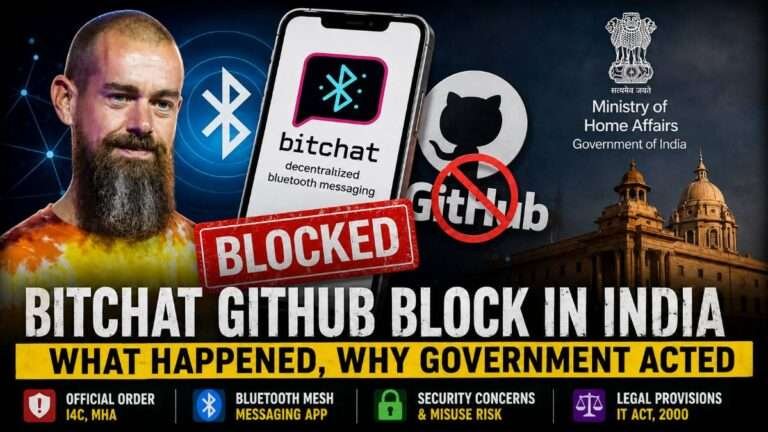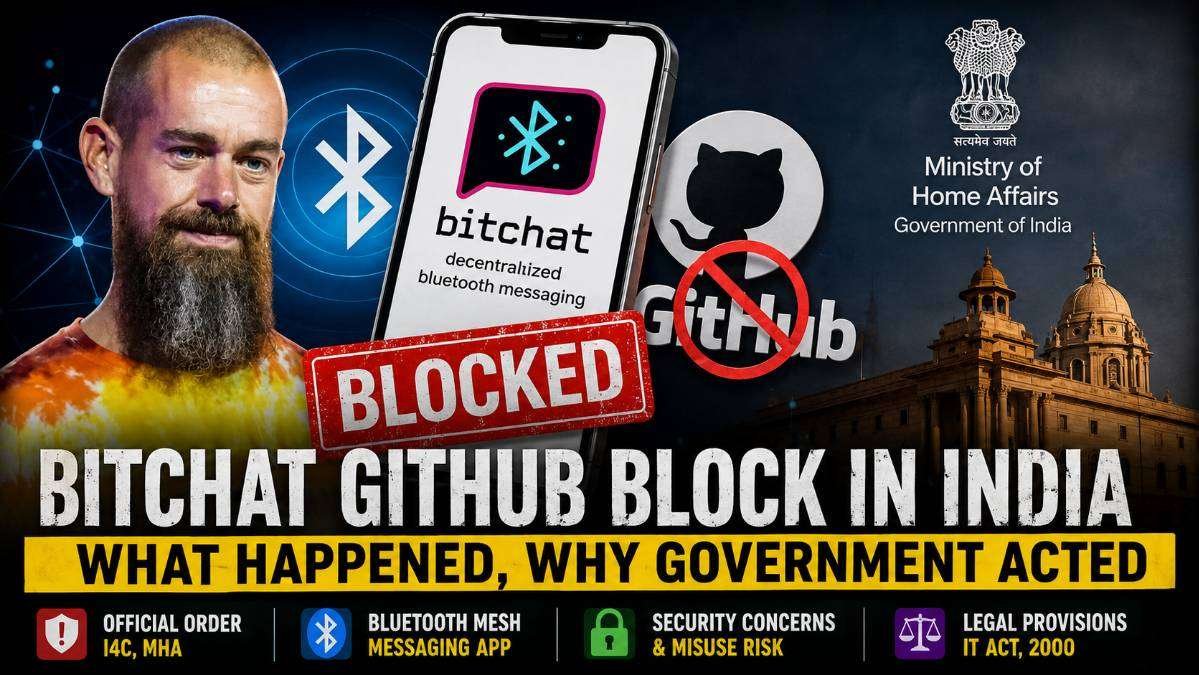
A recent government directive involving the open-source messaging application BitChat has sparked discussions across India’s technology community.
Reports indicate that the Indian Cyber Crime Coordination Centre (I4C), operating under the Ministry of Home Affairs (MHA), instructed GitHub to disable access to specific BitChat repositories hosted on its platform.
The move has attracted attention from developers, cybersecurity experts, digital rights organizations, and ordinary internet users who are trying to understand what actually happened.
Several social media posts claimed that the Indian government had completely banned BitChat. However, the available official information paints a more detailed picture.
The reported action primarily concerns GitHub repositories containing the application’s source code rather than an outright nationwide prohibition on the application itself.
This article explains the issue in simple language by examining how BitChat works, why it attracted the attention of Indian authorities, the legal provisions cited in the reported order, and the broader implications for technology, cybersecurity, and digital communication.
What Is BitChat?
BitChat is an experimental decentralized messaging application created by entrepreneur Jack Dorsey. Unlike conventional messaging platforms such as WhatsApp, Telegram, or Signal, BitChat is designed to allow nearby devices to communicate directly using Bluetooth Low Energy (BLE) mesh networking.
Instead of relying on mobile data, Wi-Fi, or centralized cloud servers, BitChat enables messages to travel from one nearby device to another. When several users are within Bluetooth range, messages can be relayed across multiple devices, extending communication without requiring internet connectivity.
This design makes the platform unique because users can continue exchanging messages even when internet access is unavailable or intentionally restricted.
Key Features of BitChat
- Operates without mobile internet or Wi-Fi.
- Uses Bluetooth Low Energy mesh networking.
- Does not require centralized servers.
- Designed as an open-source project.
- Supports direct device-to-device communication.
- Can function during internet outages.
How Does Bluetooth Mesh Messaging Work?
Traditional messaging applications depend on internet servers. Every message travels through company-operated infrastructure before reaching the recipient.
Bluetooth mesh communication works differently. Instead of sending data through the internet, nearby smartphones act as temporary relay points. A message can pass from one device to another until it reaches its intended destination, provided enough participating devices are available within range.
Because no centralized server controls the communication, tracking message routes becomes significantly more difficult than with conventional messaging services.
This architecture offers both advantages and challenges. While it improves communication resilience during emergencies, it also raises concerns among law enforcement agencies regarding lawful interception and criminal misuse.
Why Did the Indian Government Take Action?
According to the reported government notice, Indian authorities believe that BitChat’s decentralized architecture presents significant investigative challenges.
The Indian Cyber Crime Coordination Centre (I4C) reportedly concluded that the application’s technical design could make it difficult for law enforcement agencies to identify users, trace communications, or obtain subscriber information during criminal investigations.
Officials also expressed concern that decentralized communication platforms could potentially be misused during situations involving public disorder, organized crime, violent protests, terrorism, or other unlawful activities.
Because BitChat does not rely on centralized infrastructure, authorities believe conventional monitoring and legal compliance mechanisms become considerably more complicated.
The Official Concerns Mentioned in the Reported Notice
The reported government communication highlights several reasons for directing GitHub to disable access to specific BitChat repositories.
1. Anonymous Communication
Authorities argue that the application allows communication without mandatory phone number verification or centralized user registration. This can make user identification more difficult during criminal investigations.
2. No Central Server
Unlike conventional messaging platforms, BitChat does not rely on servers controlled by a company. As a result, investigators cannot simply request user records or communication logs from a service provider.
3. Communication During Internet Shutdowns
Because the application functions through Bluetooth mesh networking, it can continue operating even when mobile internet services are unavailable. Officials believe this capability could potentially be exploited during situations where communication restrictions have been imposed for security reasons.
4. Difficulty in Lawful Interception
The notice reportedly states that decentralized communication significantly complicates lawful interception, digital forensics, attribution, and evidence collection during criminal investigations.
What Exactly Was Ordered?
One important detail that has often been misunderstood is the scope of the reported government directive.
The reported notice does not order the complete shutdown of GitHub.
Instead, it reportedly instructs GitHub to remove or disable public access to specific repositories containing the BitChat source code and related Android releases. These repositories were identified as the content targeted under the order.
This distinction is important because removing access to source code repositories is different from banning an application across an entire country.
Legal Provisions Cited in the Reported Order
According to the document that has been widely reported by several news organizations, the directive refers to provisions of:
- Information Technology Act, 2000
- Section 79(3)(b)
- Information Technology (Intermediary Guidelines and Digital Media Ethics Code) Rules, 2021
- Relevant provisions of the Bharatiya Nyaya Sanhita, 2023
These legal provisions empower authorities to require intermediaries to remove or disable access to specific online content under certain circumstances when it is considered unlawful under applicable law.
Why Was GitHub Contacted Instead of App Stores?
GitHub hosts the source code that developers use to study, improve, and build software projects. Since BitChat is an open-source project, its publicly accessible repositories were available through GitHub.
By directing GitHub to remove or restrict access to those repositories, authorities sought to limit public availability of the project’s code. This action differs from requesting Apple App Store or Google Play Store to remove a mobile application.
As of the latest publicly available information, reports have focused on GitHub repositories rather than a comprehensive nationwide app-store ban.
BitChat Officially Banned in India?
One of the biggest misconceptions circulating on social media is that BitChat has been completely banned across India. Based on the information available from official documents and credible news reports, this claim is not entirely accurate.
The reported government action specifically concerns GitHub repositories hosting BitChat’s source code. At the time of writing, there has been no publicly available nationwide notification stating that every version of the BitChat application has been prohibited throughout India.
This distinction is important because removing source code from a software hosting platform is different from banning an application on mobile app stores or making its use illegal for every citizen.
READ THIS: Does Airplane Mode Charge Your Phone Faster? Official Google & Apple Battery Charging Guide
Why Is This Case Important?
The BitChat case has become significant because it represents the growing challenge governments around the world face when dealing with decentralized technologies.
Traditional communication platforms operate through centralized servers that can respond to lawful requests from authorities. Decentralized applications, however, function differently and often reduce dependence on centralized infrastructure.
This creates a difficult balance between protecting national security and encouraging technological innovation. Governments seek effective tools to investigate serious crimes, while developers argue that decentralized technology can improve privacy, resilience, and communication during emergencies.
As technology evolves, similar debates are expected to become more common in many countries, not just India.
What Does This Mean for Software Developers?
Open-source software developers are watching this development closely because GitHub is one of the world’s largest platforms for collaborative software development.
Many developers believe that open-source code encourages innovation, transparency, security research, and education. Removing repositories from public access may limit opportunities for researchers and programmers to examine how certain technologies work.
At the same time, governments maintain that public safety and national security remain important responsibilities, especially when emerging technologies could potentially be misused for unlawful purposes.
What Are Digital Rights Groups Saying?
Digital rights organizations have expressed concerns regarding the reported order. Some organizations argue that restricting access to open-source software may affect academic research, independent software development, cybersecurity education, and technological innovation.
They have also emphasized that any restrictions on online content should be transparent, proportionate, and consistent with constitutional protections relating to freedom of expression and access to information.
The Internet Freedom Foundation (IFF), among others, has publicly questioned the necessity and legal basis of the reported directive while requesting greater transparency regarding the government’s decision-making process.
READ THIS: WhatsApp Status Caption Edit Feature How to Edit Status Captions Without Deleting the Status
National Security Versus Digital Privacy
The discussion surrounding BitChat reflects a broader global debate between privacy and security.
Supporters of privacy-focused communication platforms argue that individuals should have access to secure methods of communication, particularly during emergencies, natural disasters, or situations where internet connectivity becomes unavailable.
Law enforcement agencies, however, argue that technologies designed to prevent identification or lawful interception may also create opportunities for criminal misuse. Investigating cybercrime, terrorism, organized crime, child exploitation, or financial fraud often requires digital evidence that decentralized systems may not easily provide.
Finding the right balance between these competing interests remains one of the biggest policy challenges in modern digital governance.
How Does BitChat Differ from WhatsApp and Signal?
| Feature | BitChat | Signal | |
|---|---|---|---|
| Internet Required | No (Bluetooth Mesh) | Yes | Yes |
| Central Server | No | Yes | Yes |
| Phone Number Required | Generally No | Yes | Yes |
| Open Source | Yes | Partially | Mostly Yes |
| Works During Internet Shutdown | Yes (Nearby Devices) | No | No |
Frequently Asked Questions (FAQs)
Is BitChat illegal in India?
Based on publicly available information at the time of writing, there is no official nationwide notification declaring BitChat illegal throughout India. The reported action relates specifically to GitHub repositories hosting the application’s source code.
Why did the government target GitHub?
GitHub hosts the publicly available source code for open-source software projects. Authorities reportedly instructed GitHub to disable access to specific BitChat repositories identified in the notice.
Does BitChat require the internet?
No. BitChat is designed to use Bluetooth Low Energy mesh networking, allowing nearby devices to exchange messages without relying on internet connectivity.
Can Bluetooth messaging be tracked easily?
Bluetooth mesh communication presents different technical challenges compared to internet-based messaging. Investigators may face greater difficulty obtaining centralized communication records because no single server manages message transmission.
Will this affect other messaging applications?
There is currently no indication that the reported action applies to mainstream messaging platforms such as WhatsApp, Telegram, or Signal. The reported notice specifically concerns BitChat repositories hosted on GitHub.
READ THIS: Instagram Audio Replacement Feature How to Change Music After Publishing a Post Without Deleting It
Final Thoughts
The BitChat controversy demonstrates how rapidly advancing communication technologies are reshaping discussions around cybersecurity, privacy, and national security.
Decentralized messaging platforms offer innovative ways to communicate without relying on centralized infrastructure, but they also introduce new legal and investigative challenges for governments around the world.
Based on the information available so far, the reported action focuses on restricting access to BitChat’s GitHub repositories rather than imposing a blanket nationwide ban on the application itself. As additional official statements or legal developments emerge, the situation may continue to evolve.
For readers, developers, and technology enthusiasts, it is important to rely on official government announcements and credible news organizations rather than viral social media posts that may oversimplify complex legal actions.
Understanding the distinction between removing source code from a hosting platform and banning an application entirely helps prevent the spread of misinformation and encourages informed public discussion.
Conclusion
The reported directive involving BitChat highlights the growing intersection of technology, cybersecurity, and public policy. While the Indian government has expressed concerns.
That decentralized Bluetooth-based messaging could hinder lawful investigations and potentially be misused during sensitive situations, the reported action is currently focused on GitHub-hosted source code repositories rather than a comprehensive nationwide prohibition of the application.
The case also illustrates the broader challenge faced by governments, technology companies, and software developers worldwide: encouraging innovation while ensuring that emerging technologies are not exploited for unlawful purposes.
As decentralized communication platforms continue to evolve, policymakers will likely face increasing pressure to develop regulatory approaches that protect both national security and individual digital rights.
Readers should continue following official announcements from the Ministry of Home Affairs, the Indian Cyber Crime Coordination Centre, and other authorized government agencies for verified updates instead of relying solely on social media claims.
Careful examination of official information remains the best way to understand developments involving technology, cybersecurity, and digital regulation.
About The Author