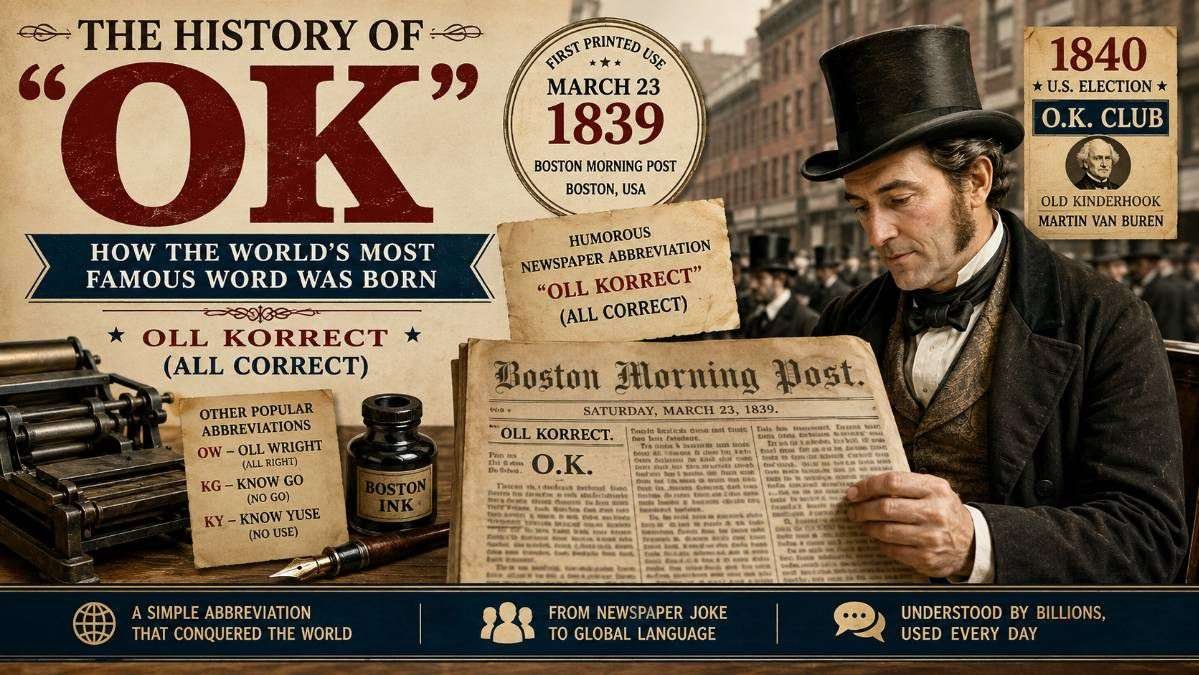
Few words are as universal as “OK”. Whether you’re confirming a message, approving a plan, ending a conversation, or simply saying everything is fine, “OK” has become part of everyday communication across the globe. It is used in hundreds of languages and understood by billions of people.
Despite its simplicity, the history of “OK” is surprisingly interesting. For many years, people debated where the word came from. Some believed it originated from another language, while others linked it to famous political figures or historical events. However, historical newspaper records and linguistic research have now established a widely accepted explanation.
According to language historians, the earliest documented use of “O.K.” appeared in an American newspaper in 1839. What began as a humorous newspaper abbreviation eventually evolved into one of the most recognized words in the English language.
When Was “OK” First Used?
The earliest confirmed appearance of “O.K.” was published on March 23, 1839, in the Boston Morning Post, a newspaper in Boston, Massachusetts.
Editors at the newspaper were participating in a humorous trend that involved intentionally misspelling common phrases and shortening them into abbreviations. During this period, “all correct” was deliberately written as “oll korrect”, and the initials became “O.K.”
At first, the abbreviation was simply a joke shared among newspaper editors and readers. No one could have predicted that this playful expression would survive for nearly two centuries and become internationally recognized.
What Does “O.K.” Actually Mean?
The abbreviation originally represented the phrase:
- Oll Korrect
This was an intentionally incorrect spelling of:
- All Correct
During the late 1830s, newspaper editors enjoyed inventing humorous spellings and abbreviations. The trend was similar to today’s internet slang or social media abbreviations.
Most of those expressions disappeared within a few years. Surprisingly, “OK” remained in use and gradually became more popular than any of the others.
The Newspaper Trend That Created “OK”
The late 1830s witnessed a brief craze among American newspapers. Writers intentionally misspelled ordinary phrases before converting them into abbreviations.
Some examples included:
- OW – Oll Wright (All Right)
- KG – Know Go (No Go)
- KY – Know Yuse (No Use)
- OFM – Our First Men
Almost every abbreviation disappeared over time except one OK.
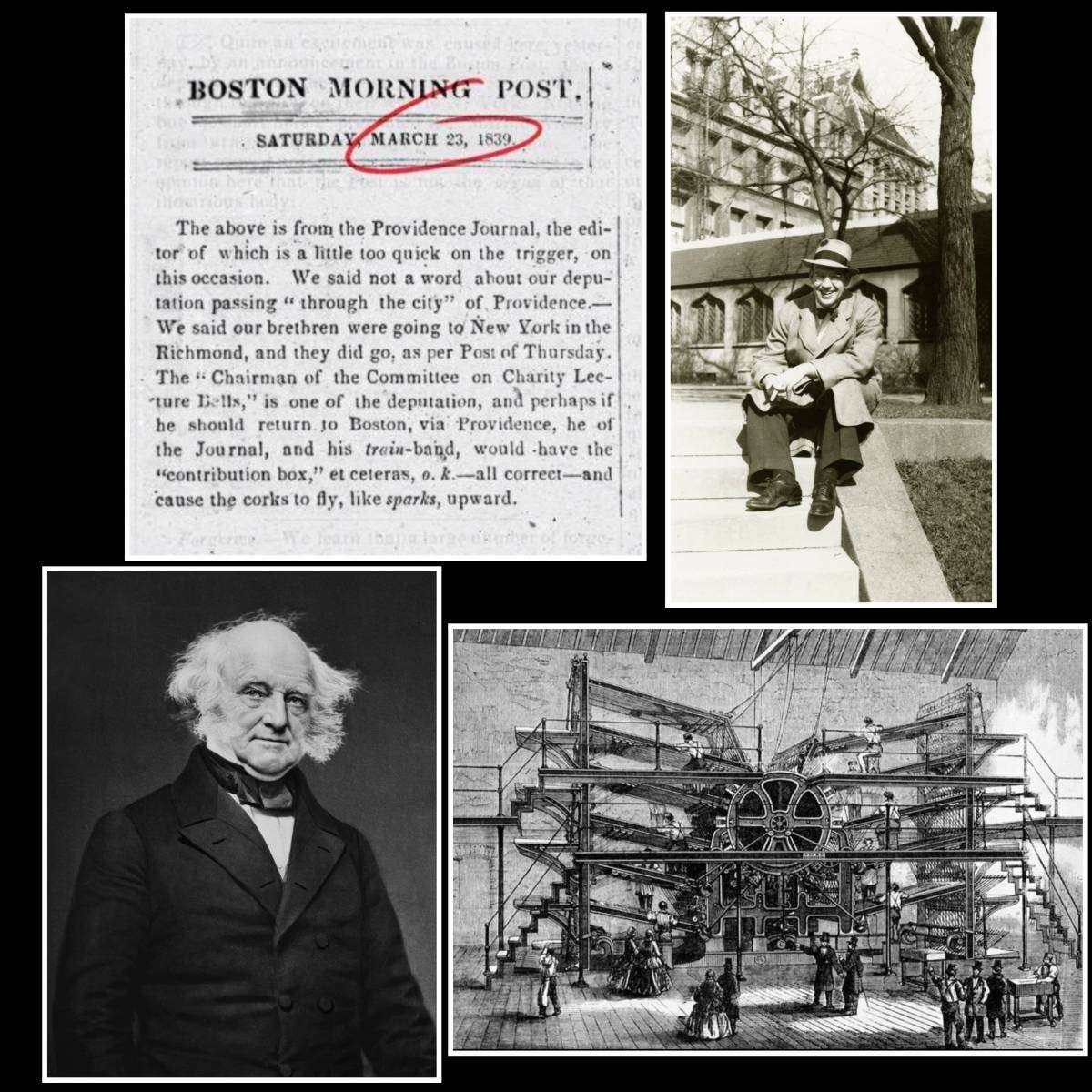
Public Domain / Historical Archives (Boston Morning Post, Library of Congress, Wikimedia Commons).
READ THIS: Tiger Tongue Explained Amazing Facts, Structure, Functions & Scientific Insights
How Politics Helped Make “OK” Famous
Although “OK” began as newspaper humor, it became nationally recognized during the 1840 United States presidential election.
President Martin Van Buren was born in Kinderhook, New York, earning him the nickname “Old Kinderhook.”
Supporters created political organizations known as the O.K. Clubs. Campaign posters, speeches, newspapers, and public meetings repeatedly used the letters “OK,” helping spread the abbreviation throughout the country.
Even people who opposed Van Buren continued using the expression, making it part of everyday American English.
The Linguist Who Solved the Mystery
For over 100 years, scholars debated the true origin of “OK.”
The mystery was finally solved by American linguist Professor Allen Walker Read of Columbia University.
During the 1960s, Read carefully examined thousands of pages from nineteenth-century newspapers and historical archives. His research located the earliest verified printed use in the Boston Morning Post dated March 23, 1839.
Today, his findings are accepted by major dictionaries and language historians worldwide.
Popular Myths About the Origin of “OK”
Before historians discovered newspaper evidence, many different stories attempted to explain where “OK” came from.
1. Andrew Jackson’s Spelling
One popular myth claimed U.S. President Andrew Jackson frequently wrote “OK” because he misspelled “all correct.” Historians have found no convincing evidence supporting this claim.
2. Greek Origin
Another theory suggested “OK” came from the Greek phrase “Ola Kala,” meaning “everything is good.” Although interesting, researchers found no historical connection with the 1839 newspaper abbreviation.
3. Choctaw Language
Some believed “OK” originated from the Choctaw word “okeh.” While “okeh” exists in the Choctaw language, evidence shows the newspaper abbreviation appeared independently.
4. Haitian Port Theory
Another story linked “OK” to the Haitian port of Aux Cayes, claiming exported goods were labeled “OK.” Historians have not found reliable evidence supporting this explanation.
READ THIS: National Flag Adoption Day 2026 History, Significance, Facts and the Story Behind India Tiranga
Why Did “OK” Survive While Other Abbreviations Disappeared?
Language experts believe several factors contributed to its success.
- It is extremely short and easy to pronounce.
- It clearly expresses agreement or approval.
- It works in spoken and written communication.
- Political campaigns increased its popularity.
- Newspapers continued using it regularly.
- Businesses, governments, and later technology adopted it.
Because of these advantages, “OK” gradually became part of everyday conversation.
How “OK” Became a Global Word
Today, “OK” appears almost everywhere.
- Text messages
- Email conversations
- Computer software
- Smartphones
- Business communication
- International travel
- Education
- Government documents
- Movies and television
Even people who do not speak English often understand and use “OK.” It has become one of the few words recognized across nearly every culture.
Interesting Facts About “OK”
- First recorded use: March 23, 1839
- First newspaper: Boston Morning Post
- Original spelling: O.K.
- Original phrase: Oll Korrect
- Meaning: All Correct
- Political popularity: Martin Van Buren’s 1840 campaign
- Historical research: Allen Walker Read
- Current status: One of the world’s most recognized words
READ THIS: Sitting for 8 Hours a Day? How Long Desk Hours May Affect Heart Health
Why the Story Still Matters Today
The history of “OK” reminds us that language constantly evolves. Words sometimes emerge from jokes, trends, politics, or everyday conversation before becoming permanent parts of our vocabulary.
What began as a humorous newspaper abbreviation eventually became an international symbol of agreement, approval, and reassurance. Every time someone types “OK” in a text message or says it during a conversation, they are unknowingly using a word whose documented history stretches back to 1839.
Conclusion
The story behind “OK” is one of the most fascinating examples of how language evolves. Historical records show that its earliest verified appearance occurred in the Boston Morning Post on March 23, 1839.
where it represented the humorous phrase “oll korrect”, a playful spelling of “all correct.” Although many alternative theories have circulated over the years, modern linguistic research strongly supports this explanation.
From a lighthearted newspaper joke to a political campaign slogan and eventually a universally recognized expression, “OK” has traveled an extraordinary journey. Today it is spoken, written, and understood by people around the world, proving that even the simplest words can have remarkable histories.
About The Author