National Flag Adoption Day 2026 History, Significance, Facts and the Story Behind India Tiranga
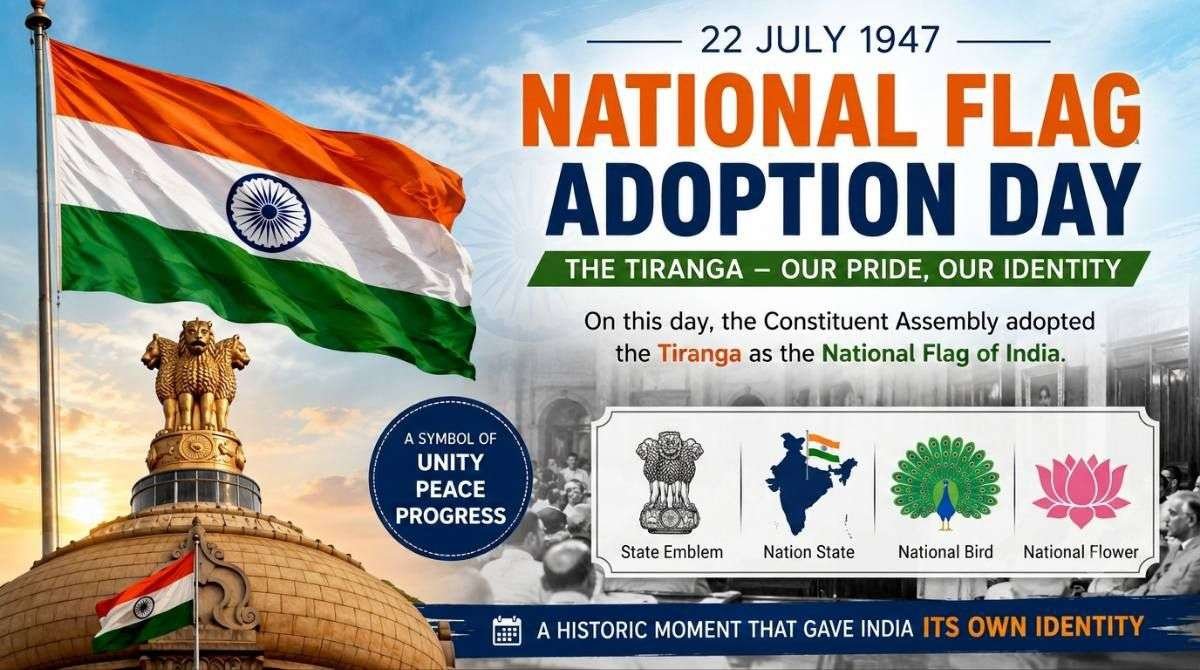
Every year on July 22, India remembers one of the most significant moments in its journey toward independence. On this day in 1947, the Constituent Assembly officially adopted the Tiranga as the National Flag of India.
Although Independence Day is celebrated on August 15, the adoption of the National Flag on July 22 laid the foundation for the identity of a free and sovereign nation.
The Indian National Flag is much more than a combination of three colours. It symbolizes the country’s unity, freedom, courage, peace, and progress. Every time the Tiranga flies high, it reminds Indians of the sacrifices made by countless freedom fighters who dedicated their lives to achieving independence.
This article explores the history, significance, evolution, symbolism, and interesting facts about National Flag Adoption Day and the Indian National Flag.
What Is National Flag Adoption Day?
National Flag Adoption Day is observed every year on July 22 to commemorate the day when the Constituent Assembly of India adopted the present form of the Indian National Flag in 1947. The decision came just weeks before India gained independence from British rule on August 15, 1947.
While July 22 is widely remembered for this historic milestone, it is important to note that the Government of India has not officially declared “National Flag Adoption Day“ as a national observance.
Nevertheless, educational institutions, historians, media organizations, and citizens recognize the importance of this date because it marks the official adoption of one of India’s most respected national symbols.
READ THIS: The First Laptop in the World: Complete History Explained
The Historical Background
The story of the Indian National Flag did not begin in 1947. Several versions of the national flag were designed during India’s freedom struggle. These early flags represented the hopes and aspirations of millions of Indians fighting for independence.
As India’s independence became certain in 1947, the Constituent Assembly needed a flag that represented the entire nation rather than any political movement. After careful discussions, a final design was selected.
On July 22, 1947, Jawaharlal Nehru presented the resolution for adopting the National Flag before the Constituent Assembly. The resolution was accepted unanimously, making the Tiranga the official National Flag of India.
The Design of the Tiranga
The Indian National Flag consists of three equal horizontal stripes.
- Saffron (Top) – Represents courage, sacrifice, strength, and selfless service.
- White (Middle) – Symbolizes peace, truth, honesty, and harmony.
- Green (Bottom) – Represents prosperity, fertility, agriculture, growth, and hope.
At the center of the white band is the Ashoka Chakra, a navy blue wheel with 24 spokes. The Ashoka Chakra was adopted from the Lion Capital of Emperor Ashoka at Sarnath.
Meaning of the Ashoka Chakra
The Ashoka Chakra is one of the most meaningful elements of the National Flag. Instead of representing stillness, the wheel symbolizes continuous movement, progress, justice, and righteousness.
The twenty-four spokes are often associated with virtues such as courage, patience, peacefulness, honesty, compassion, morality, wisdom, responsibility, and continuous progress. The Chakra reminds every citizen that a nation must keep moving forward with determination and integrity.
Who Designed the Indian National Flag?
The Indian National Flag is closely associated with Pingali Venkayya, an Indian freedom fighter and agriculturist who designed an earlier version of the national flag. His design became the foundation for the final Tiranga adopted in 1947.
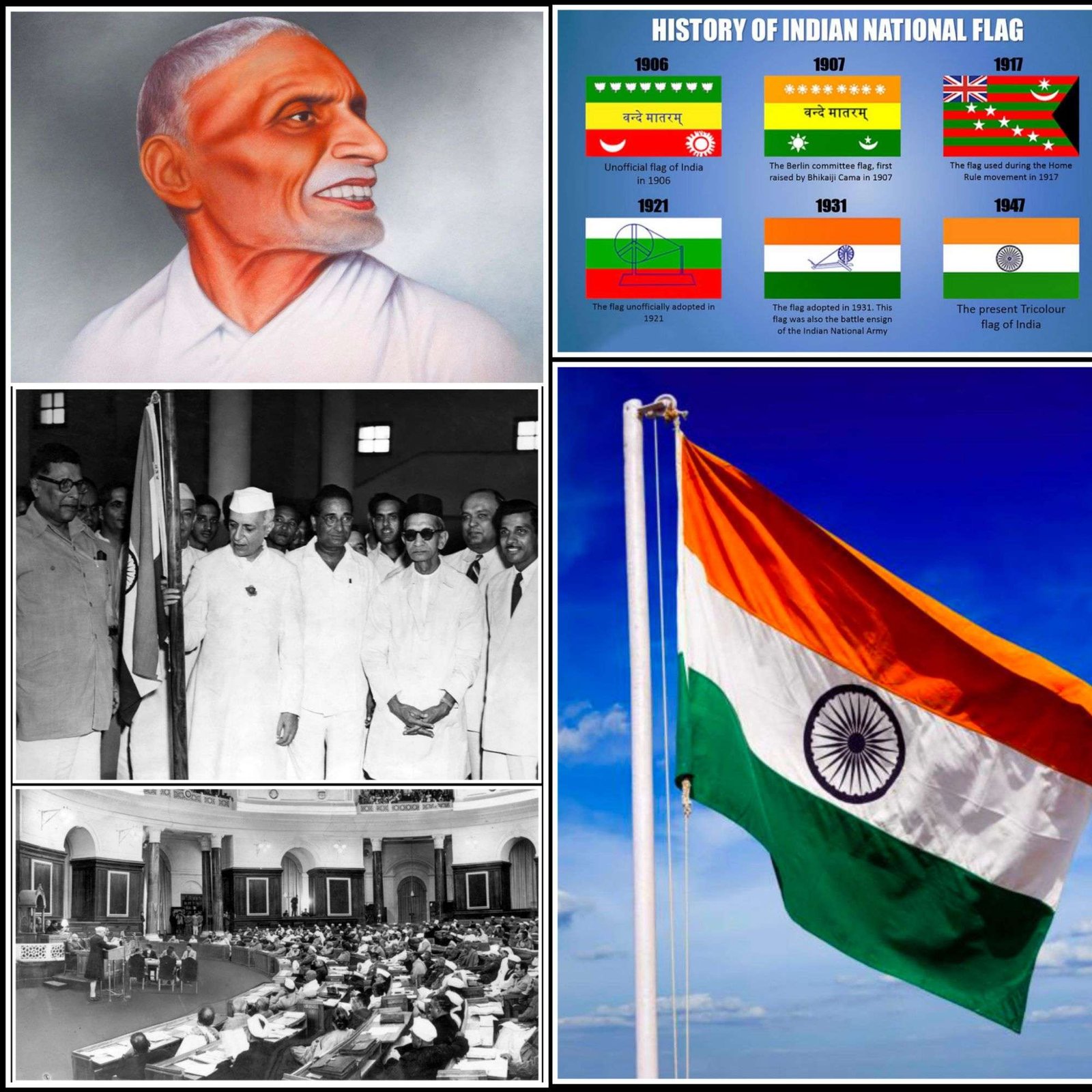
Before the official adoption, the spinning wheel (Charkha) appeared in earlier versions of the flag. However, the Constituent Assembly replaced it with the Ashoka Chakra to create a symbol that represented justice, progress, and the timeless values of India.
Why July 22 Is Historically Important
July 22 holds a unique place in India’s history because it marks the moment when the future Republic of India received its official national symbol before independence.
The adoption of the Tiranga gave every Indian a common identity regardless of religion, language, culture, or region. It became a symbol of unity in diversity and reflected the democratic values that India continues to uphold.
For this reason, historians consider July 22 one of the most significant dates in India’s constitutional history.
READ THIS: World Largest Underwater National Flag: Andaman & Nicobar Sets Guinness World Record
Interesting Facts About the Indian National Flag
- The Indian National Flag was officially adopted on July 22, 1947.
- India became independent on August 15, 1947.
- The flag has three equal horizontal stripes.
- The ratio of the National Flag is 3:2.
- The Ashoka Chakra contains exactly 24 spokes.
- The Chakra replaced the spinning wheel found in earlier flag designs.
- The National Flag represents all Indians irrespective of religion, caste, language, or region.
- The Flag Code of India explains how the National Flag should be displayed respectfully.
The Importance of Respecting the National Flag
The Tiranga is one of India’s most respected national symbols. Every citizen has the responsibility to treat it with dignity and honour.
The Flag Code of India provides guidelines regarding the proper display, handling, and respectful use of the National Flag. Citizens should avoid damaging, disrespecting, or improperly displaying the Tiranga.
With initiatives like the Har Ghar Tiranga campaign, awareness about the National Flag has increased significantly. Millions of Indians proudly hoist the Tiranga during Independence Day celebrations, Republic Day, and other important national occasions.
National Flag and Indian Unity
The Indian National Flag unites people from every part of the country. Whether someone belongs to the Himalayas, the deserts of Rajasthan, the coastal regions, or the northeastern states, the Tiranga represents every citizen equally.
It flies proudly at schools, government offices, military establishments, sports events, scientific missions, and international platforms. Whenever Indian athletes, scientists, soldiers, or citizens achieve success globally, the sight of the Tiranga fills millions of people with pride.
READ THIS: Why Article 370 Was Removed from Indian Constitution: Official Reasons
How Schools and Institutions Observe July 22
Many schools, colleges, universities, and educational institutions organize awareness programmes on July 22. Students learn about the history of the National Flag, the freedom movement, constitutional values, and the sacrifices made by freedom fighters.
Activities often include speeches, quizzes, essay competitions, flag-themed exhibitions, cultural programmes, and discussions on India’s national symbols.
Lessons for Future Generations
The adoption of the Tiranga reminds every generation that freedom came after years of struggle and sacrifice. The National Flag is not merely a decorative object but a powerful reminder of democracy, equality, justice, and national unity.
Young citizens should understand the meaning of the three colours and the Ashoka Chakra. Knowing the history behind the flag helps strengthen patriotism and respect for the Constitution of India.
Conclusion
National Flag Adoption Day on July 22 commemorates one of the defining moments in India’s constitutional and democratic journey. On this historic day in 1947, the Constituent Assembly adopted the Tiranga as the National Flag, giving the soon-to-be independent nation a symbol of unity, courage, peace, and progress.
Although July 22 is not officially designated by the Government of India as a national observance under the name “National Flag Adoption Day,” its historical importance remains unquestionable.
The Tiranga continues to inspire every Indian with its timeless values and reminds us of the sacrifices made to secure the nation’s freedom.Whenever the National Flag waves proudly against the sky, it represents the dreams, determination, and diversity of more than a billion people.
Respecting the Tiranga means respecting the ideals of the Constitution, honouring the heroes of India’s freedom struggle, and committing ourselves to building a stronger, more united, and more prosperous nation for future generations.
About The Author