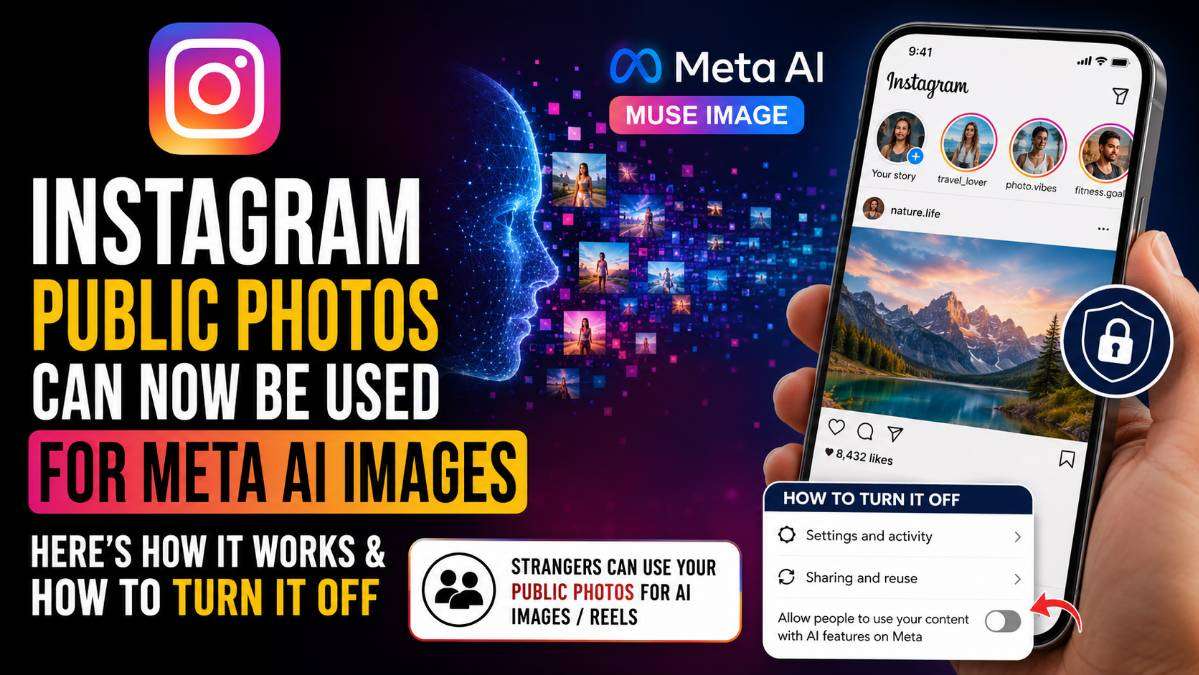
Instagram users are once again discussing privacy after Meta introduced a new artificial intelligence image generation model called Muse Image. Social media posts claiming that strangers can now use public Instagram photos to create AI images have quickly gone viral.
While some of these posts use alarming language, there is an important new feature behind the concern, and public account users should understand how it works.
Meta officially introduced Muse Image as a new image generation model built by Meta Superintelligence Labs. The company says the model is designed to create and edit images with better visual quality, consistency and a stronger understanding of people and their surroundings.
One of the most notable features is the ability to @-mention Instagram accounts while using Meta AI. According to Meta, users can mention specific Instagram profiles in the Meta AI app and bring those profiles into AI image creations. This means that content associated with eligible public Instagram profiles may become part of the creative experience when an account is referenced.
This development has naturally raised questions about privacy, consent and the way public social media content can be used in the age of generative artificial intelligence.
What Is Meta Muse Image?
Muse Image is Meta’s new artificial intelligence model for image generation and editing. Instead of only creating a basic image from a written prompt, the technology is designed to understand more detailed instructions and maintain visual consistency while users continue editing an image.
For example, a person may ask Meta AI to generate a picture and then request changes to clothing, surroundings, lighting or other visual elements. The model is designed to make these edits without completely changing the main subject or composition of the image.
Meta has also integrated the technology into its broader artificial intelligence ecosystem. The company has been expanding Meta AI across its applications and services, making AI-powered creation a bigger part of the user experience.
The feature attracting the most attention, however, is Instagram account mentioning. Meta’s official announcement states that users can @-mention Instagram accounts in the Meta AI app to bring specific Instagram profiles into generated images.
Can Strangers Really Use Your Instagram Photos for AI Images?
The short answer is that users with public Instagram accounts should pay attention to the new feature, but viral claims need to be understood carefully.
Meta has officially demonstrated images generated in Meta AI using @-mentions of public Instagram accounts. This confirms that public profiles can be referenced as part of the Muse Image creation experience where the feature is available.
However, this does not mean another user automatically receives ownership of your original photographs. It also does not mean Instagram has created a simple download button that transfers your copyright to strangers.
The issue is about AI-powered creation and reuse. A public Instagram account may be referenced in an artificial intelligence generation process, allowing Meta AI to create a new visual involving the referenced profile.
This distinction is important because some viral posts simply say, “Instagram now allows strangers to steal your photos.” That wording is misleading. The actual development involves Meta’s generative AI features and the ability to reference public Instagram accounts in AI image creation.
Even with that clarification, many users may still feel uncomfortable with the idea. A photograph uploaded to Instagram may have originally been intended for followers, friends or a wider public audience. The possibility of the profile being referenced in AI-generated content creates a different type of use that some people may not expect.
Why Are Public Instagram Accounts Important?
Instagram public accounts are designed to make content widely visible. Anyone may generally visit a public profile and view its available posts and Reels, subject to Instagram’s features and restrictions.
Meta’s Privacy Center also explains that the company uses public information for some generative AI purposes. Public information may include publicly available posts, comments, photos and captions, depending on the applicable service, region and Meta’s policies.
The new Muse Image feature adds another reason for users to review their privacy choices. If a person regularly uploads personal photographs, family images or identifiable content to a public profile, it is worth understanding which sharing and reuse options are currently enabled.
Creators, influencers and public personalities may have different preferences. Some creators may welcome AI-powered creative features because they can increase engagement and experimentation. Others may prefer stronger control over how their image or content is referenced.
How to Check Instagram Sharing and Reuse Settings
Instagram provides controls related to the sharing and reuse of content. The exact wording or availability of individual options may vary depending on the user’s account, application version, region and the rollout of new Meta AI features.
READ THIS: Instagram AI Creator Option Explained Should You Turn It On?
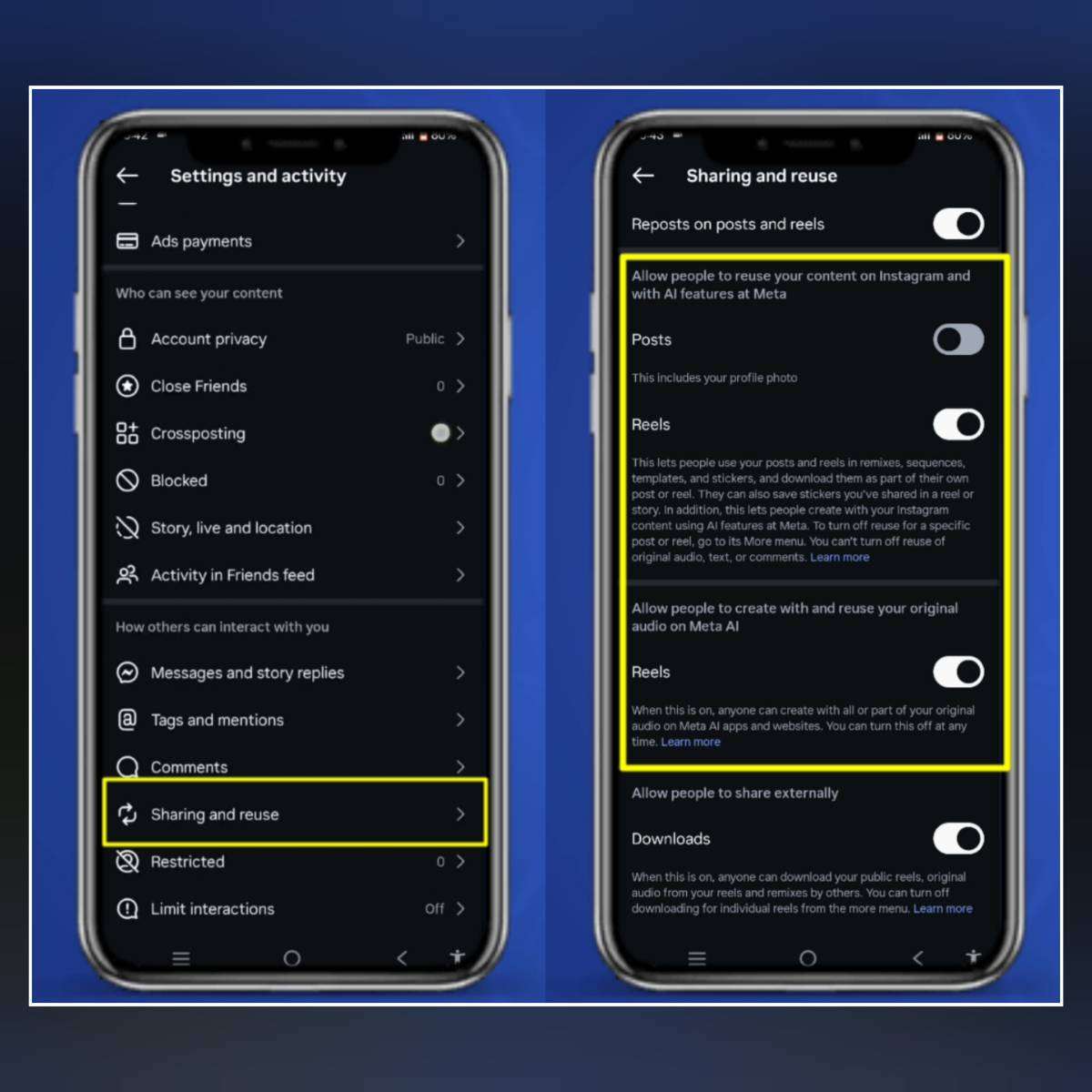
Users can generally check the relevant controls by following these steps:
- Open the Instagram application on your smartphone.
- Tap your profile picture to open your Instagram profile.
- Tap the three-line menu icon in the top-right corner.
- Open the settings and activity section.
- Look for the “Sharing and reuse” option.
- Review the options under the section that allows other people to create with or reuse your content.
- Check the available controls for Posts and Reels.
- Turn off the relevant reuse options if you do not want other people to reuse eligible content through supported Instagram features.
Users should read the description shown next to each setting before making changes. Meta frequently updates Instagram features, and the wording displayed in the application may change over time.
If a particular artificial intelligence option mentioned in online reports is not visible on your account, it may be because the feature has not yet reached your account or region. Updating the Instagram application and checking the settings again may help users see the latest controls available to them.
Should You Make Your Instagram Account Private?
People who are concerned about the public visibility of their personal photographs may also consider using a private Instagram account.
When an account is private, only approved followers can generally view the account’s shared content. This provides a different level of visibility compared with a public account.
However, changing an account to private is a personal decision. It may not be practical for businesses, digital creators, news pages or professionals who depend on public reach.
For such users, reviewing Instagram’s sharing and reuse settings is especially important. Instead of reacting to a viral post without checking the facts, users should open their own Instagram settings and understand the controls available on their account.
Does This Mean Meta Owns All Your Photos?
No. The introduction of an AI image generation feature should not automatically be interpreted as Meta transferring ownership of every Instagram photograph to itself or to another user.
Ownership, platform licences, artificial intelligence data use and content reuse are related but legally different issues. Users should avoid assuming that an AI feature automatically removes all rights connected with their original photographs.
At the same time, uploading content to a public social media platform can involve platform terms and policies governing how information is processed and used to provide services.
Meta maintains information in its Privacy Center explaining how public information may be used for generative AI models and related AI experiences.
Anyone who regularly publishes commercially valuable photography, artwork or professional creative content should carefully review Instagram’s current terms, privacy information and account controls.
READ THIS: Aadhaar, Passport & Voter ID Proof of Indian Citizenship? Official Facts
Why This Update Matters for Regular Instagram Users
Artificial intelligence is changing the meaning of public content on the internet. In the past, the main concern was whether another person could download a photograph, take a screenshot or repost it without permission.
Generative AI introduces a new question. A system may use available information and references to generate new visual content that did not previously exist.
This creates concerns about identity, context and personal reputation. An AI-generated image can place a person in a fictional environment or create a scene that never happened. Even when the image is clearly creative, viewers may misunderstand it if it is shared without proper context.
Meta has previously discussed labelling AI-generated content on its platforms and has said that transparency and responsibility are important parts of its approach to generative AI. However, users still need to develop basic awareness about AI-generated images and should avoid believing every realistic picture they see online.
It is also important for users to report content that violates Instagram’s rules or misuses their identity in a harmful manner. Privacy settings are useful, but responsible behaviour and platform enforcement remain important as AI creation tools become more powerful.
Do Not Panic, but Check Your Settings
The viral warning about Instagram photos and artificial intelligence is not completely fake. Meta has officially introduced Muse Image, and the company has confirmed that Instagram accounts can be @-mentioned in Meta AI to bring specific profiles into AI image creations.
READ THIS: PhonePe Wallet Inactivity Fee 2026: ₹100 Charge for Inactive Wallets Explained
However, claims that Instagram has simply given strangers ownership of every public photograph are exaggerated. The real issue is the expansion of AI-powered creation and the way eligible public Instagram profiles can be referenced in these experiences.
Users with public accounts should review their Instagram sharing and reuse settings, understand the controls available to them and decide what level of public visibility is suitable for their content.
Conclusion
Meta’s Muse Image marks another major step in the integration of generative artificial intelligence with social media. The ability to reference Instagram accounts in AI image creation may be exciting for some creators, but it also raises understandable privacy and consent concerns for regular users.
The most sensible response is to stay informed. Open Instagram, review the “Sharing and reuse” settings and check the latest privacy controls available on your account. If you share personal photographs publicly, take time to understand how Meta’s AI features and public information policies work.
Artificial intelligence features will continue to evolve, and social media platforms are likely to introduce more creative tools in the future. Users should not depend only on viral screenshots or alarming captions for information.
Checking official platform announcements and privacy settings remains the best way to understand what has actually changed and what controls are available.
About The Author