Special Intensive Revision (SIR) 2026 Will Booth Level Officers Visit Every House? Complete Voter Verification Guide
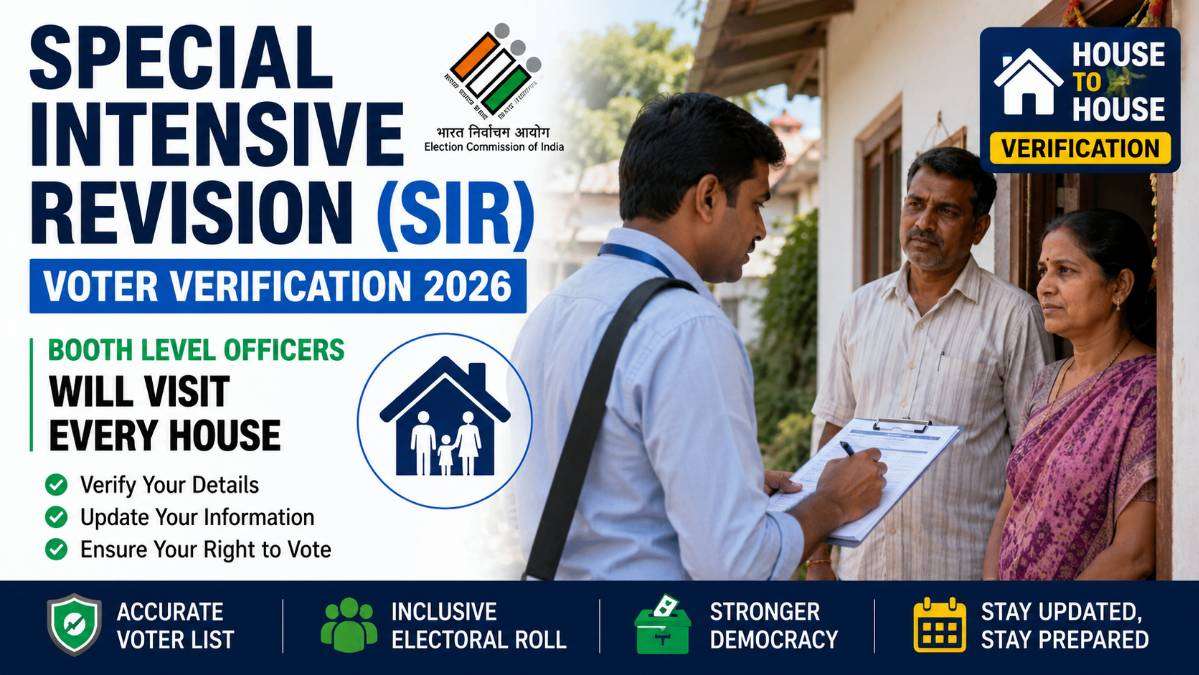
The Election Commission’s Special Intensive Revision (SIR) is an important electoral roll verification exercise designed to ensure that voter lists remain accurate, updated, and free from errors.
As part of this process, Booth Level Officers (BLOs) visit households to verify voter information, collect updated details, and help eligible citizens remain enrolled in the electoral roll.
Many people become concerned when election officials visit their homes or ask for voter-related information. However, these visits are a normal part of the electoral revision process and are intended to improve the accuracy of the voters’ list before future elections.
What is Special Intensive Revision (SIR)?
Special Intensive Revision, commonly known as SIR, is a comprehensive verification process conducted by the Election Commission to review and update electoral rolls. Unlike routine updates that happen throughout the year, SIR involves a detailed house-to-house verification exercise carried out by Booth Level Officers.
The primary objective is to ensure that every eligible citizen is included in the electoral roll while removing duplicate, shifted, or deceased entries according to the applicable election rules and procedures.
Why Is SIR Conducted?
Accurate electoral rolls are essential for conducting free and fair elections. Over time, people move to different locations, some voters pass away, young citizens become eligible to vote, and personal details such as names or addresses may change.
Without regular verification, voter lists can become outdated. The Special Intensive Revision helps correct these issues before elections are conducted.
The exercise also strengthens transparency and improves public confidence in the electoral process by ensuring that every eligible voter has an equal opportunity to participate in democracy.
Will Election Officials Visit Every House?
Yes. During the Special Intensive Revision, Booth Level Officers are expected to conduct house-to-house visits within their assigned polling areas. Their responsibility is to contact registered voters, verify the information available in electoral records, distribute required forms where applicable, and collect updated information.
If a family is unavailable when the officer visits, another visit may be scheduled. In some cases, the official may leave a notice or contact details so that residents can complete the verification later.
The purpose of these visits is verification only. Citizens should cooperate with authorized election officials and verify their identity before sharing any information.
READ THIS: BIS-Certified Helmet Rules in India 2026 Official MoRTH & BIS Guidelines
Who Are Booth Level Officers (BLOs)?
Booth Level Officers are government-appointed officials assigned to specific polling stations. They serve as the local representatives of the Election Commission during electoral roll revision activities.
Their responsibilities include:
- Visiting households assigned to their polling booth.
- Verifying voter details.
- Helping citizens complete required forms.
- Identifying corrections in electoral records.
- Reporting changes according to Election Commission guidelines.
BLOs play an important role in ensuring that voter records remain accurate and updated.
What Information May Be Verified?
During the visit, the Booth Level Officer may verify information such as:
- Name of the voter.
- Residential address.
- Age or date of birth.
- Family details where applicable.
- Whether the voter still resides at the registered address.
- Any corrections required in the electoral roll.
The exact information collected depends on the Election Commission’s instructions for that revision cycle.
Why Accurate Electoral Rolls Matter
An updated voter list benefits everyone. It helps ensure that genuine voters are able to cast their votes without unnecessary difficulties. It also reduces the possibility of duplicate registrations and improves the efficiency of election management.
Maintaining an accurate electoral roll protects the integrity of democratic elections and supports equal participation for all eligible citizens.
What Should Citizens Do During the Visit?
Citizens should remain calm and cooperate with the Booth Level Officer. Before providing information, they may verify the officer’s official identity card if they have any doubts.
It is advisable to:
- Provide correct and truthful information.
- Check the spelling of names carefully.
- Review address details.
- Inform the officer if any correction is needed.
- Submit required forms within the prescribed timeline if requested.
Providing accurate information helps avoid future issues related to voter registration.
What If No One Is Home?
If residents are unavailable during the first visit, the Booth Level Officer may attempt another visit according to local procedures. Sometimes a notice or contact information may be left so that the family can complete verification later.
Citizens should respond promptly if contacted to avoid delays in the verification process.
READ THIS: PhonePe Wallet Inactivity Fee 2026: ₹100 Charge for Inactive Wallets Explained
Common Questions
Is the house visit compulsory?
The house visit is part of the official electoral verification process. Cooperating with election officials helps maintain accurate voter records.
Will every family receive a visit?
The objective of the Special Intensive Revision is to conduct verification across all households within the assigned polling areas, although the exact implementation may vary according to local administrative arrangements.
Should people share personal information with anyone claiming to be an election official?
No. Citizens should verify that the person is an authorized Booth Level Officer or other election official before providing information.
Can voter details be corrected?
Yes. If there are mistakes in names, addresses, or other eligible details, corrections can generally be requested following the Election Commission’s prescribed procedure.
Importance of Public Participation
The success of the Special Intensive Revision depends not only on election officials but also on public cooperation. When citizens participate responsibly, electoral rolls become more reliable and inclusive.
Young voters who have recently become eligible, families that have shifted residence, and individuals who notice errors in their voter information should use this opportunity to ensure their records are accurate.
Conclusion
The Special Intensive Revision (SIR) is a significant exercise aimed at improving the quality and accuracy of electoral rolls. House-to-house verification by Booth Level Officers is a routine administrative process intended to ensure that every eligible citizen has an opportunity to be correctly registered as a voter.
Citizens should cooperate with authorized election officials, verify the information being recorded, and promptly report any corrections that may be required.
Accurate voter lists strengthen the democratic process, promote fair elections, and help ensure that every eligible vote counts. By participating responsibly during the SIR process, voters contribute to a more transparent, reliable, and inclusive electoral system.
About The Author