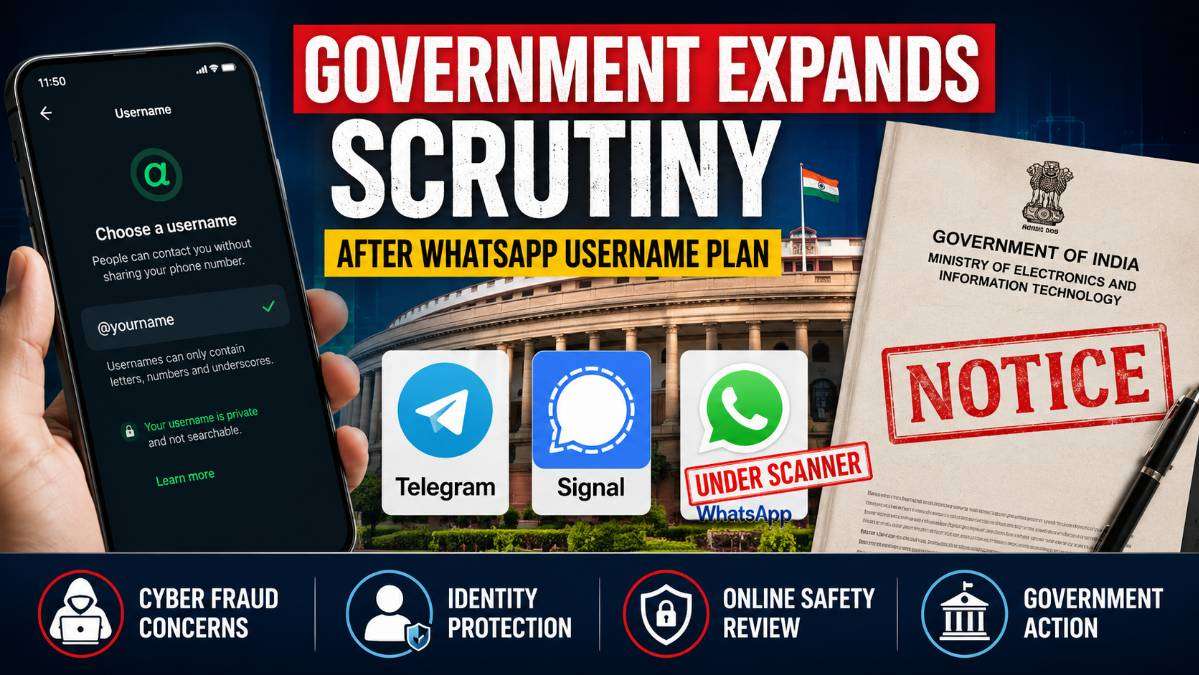
The Government of India has reportedly widened its examination of username-based messaging features by seeking explanations from Telegram and Signal, following its recent intervention in WhatsApp’s proposed username rollout.
The move reflects growing concerns over online safety, identity protection, and the misuse of digital communication platforms by cybercriminals.
According to multiple media reports citing government sources, the Ministry of Electronics and Information Technology (MeitY) has issued notices to Telegram and Signal to understand.
how their username systems function and what safeguards are in place to prevent misuse. However, as of now, MeitY has not released an official public press statement regarding these notices.
Background: Why Is the Government Looking at Usernames?
The scrutiny comes shortly after Meta-owned WhatsApp was reportedly asked to temporarily pause the rollout of its username feature in India. The government is believed to have raised concerns that allowing users to communicate primarily through usernames instead of phone numbers could create new opportunities for cyber fraud if strong verification measures are not implemented.
Officials are particularly focused on preventing identity impersonation, phishing attempts, financial scams, and so-called “digital arrest” frauds that have increased across the country in recent years.
Authorities are evaluating whether username-based communication could make it easier for criminals to hide their identities or impersonate legitimate individuals and organizations.
Telegram and Signal Under Review
Both Telegram and Signal already support username-based communication, allowing users to connect without directly sharing their phone numbers in many situations. Reports indicate that the government has sought details about how these platforms verify usernames, prevent impersonation, and respond to complaints involving fake accounts.
The objective appears to be understanding whether the existing safety mechanisms are sufficient to protect users while maintaining privacy and secure communication.
WhatsApp’s Earlier Clarification
Following questions from Indian authorities, WhatsApp clarified that its upcoming username feature is designed with several privacy protections. The company stated that usernames are optional, are not publicly searchable, and do not replace.
the phone number required during account creation. It also said that additional safeguards have been developed to reduce impersonation risks and protect verified public figures.
Meta has maintained that the feature is intended to improve user privacy by reducing the need to share personal phone numbers during conversations.
READ THIS: India Pauses WhatsApp Username Rollout Government Seeks Meta’s Explanation
No Official Public Press Release Yet
While several leading media organizations have reported that notices were issued to Telegram and Signal, there is currently no official press release published on the Ministry of Electronics and Information Technology’s website confirming these developments. The available information is based on reports citing government officials and sources familiar with the matter.
As a result, readers should distinguish between officially published government statements and credible media reports based on official sources.
What Could Happen Next?
The government is expected to continue discussions with messaging platforms regarding user safety, privacy protections, and mechanisms to prevent cybercrime.
READ THIS: Aadhaar, Passport & Voter ID Proof of Indian Citizenship? Official Facts
Depending on the outcome of these consultations, platforms may be asked to strengthen verification systems, introduce additional security measures, or modify certain aspects of username functionality before wider implementation.
Conclusion
India’s examination of username-based messaging features now appears to extend beyond WhatsApp to include Telegram and Signal. The government’s primary focus is balancing user privacy with stronger safeguards against online fraud and impersonation.
Although media reports indicate that notices have been issued, an official public statement from MeitY has not yet been released. Users should therefore rely on verified information as further updates become available through official government announcements and company responses.
Sources:
- Ministry of Electronics and Information Technology (MeitY)
- Press Trust of India (PTI)
- Official statements from WhatsApp (Meta), where applicable
About The Author