Ostium Crypto Hack Explained Oracle Exploit Pauses Trading as Millions in USDC Are Stolen
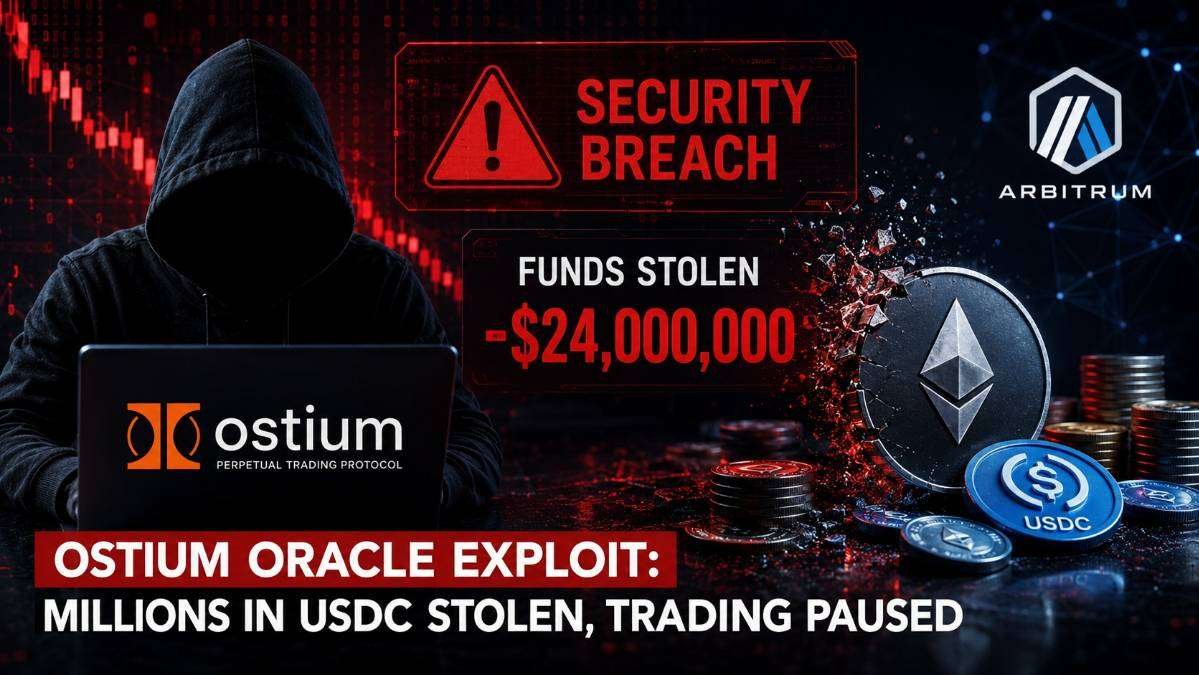
The decentralized finance (DeFi) industry has witnessed another significant security incident after perpetual trading protocol Ostium confirmed that it was targeted in an oracle-related exploit.
The attack forced the platform to pause trading while security experts began investigating the incident. Initial blockchain investigations estimated losses of around $18 million, while some later analyses suggested that the overall impact may have approached $24 million. However, the higher estimate has not been officially confirmed by the Ostium team.
The incident once again highlights the growing importance of securing decentralized financial infrastructure. While blockchain technology itself remains highly secure, vulnerabilities in smart contracts, oracle systems, and protocol integrations continue to present attractive opportunities for cybercriminals.
What Is Ostium?
Ostium is a decentralized perpetual trading protocol built on the Arbitrum blockchain. Unlike traditional cryptocurrency exchanges, Ostium allows users to trade multiple financial markets directly from their crypto wallets without relying on a centralized intermediary.
READ THIS: India Removes Chinese Battery Apps Over E-Rickshaw Remote Shutdown Concerns
Traders can access cryptocurrency markets, forex pairs, commodities, stock indices, and other financial assets using USDC as collateral. The protocol depends heavily on accurate price information to execute trades fairly.
To provide these market prices, Ostium relies on oracle systems that deliver real-time external data to its smart contracts. These oracle mechanisms are essential because blockchains cannot directly access live financial market information without outside data providers.
How the Exploit Happened
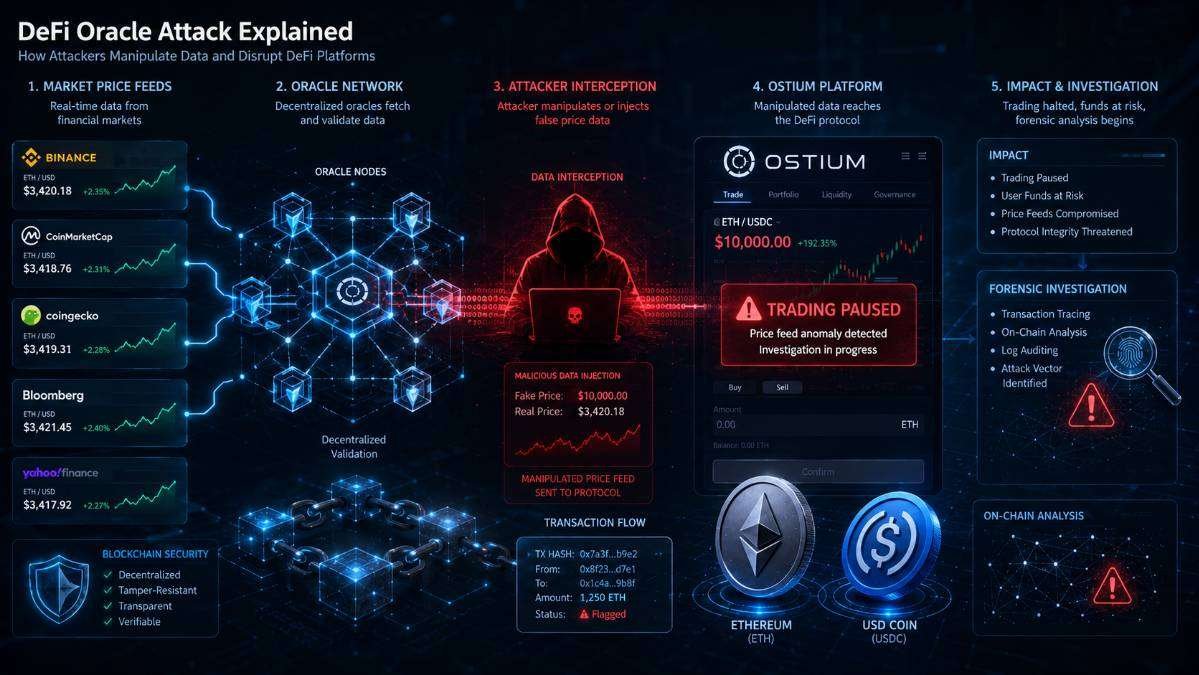
According to the project’s official statements and blockchain security researchers, attackers exploited a weakness involving Ostium’s oracle infrastructure. Rather than breaking the blockchain itself, the attackers manipulated how price information was supplied to the protocol.
Investigators believe the attackers submitted manipulated future-dated price data that appeared legitimate to the protocol. Because the incorrect pricing information was accepted, the attacker was able to create trading positions that generated artificial profits. Those profits were then withdrawn from the protocol’s liquidity pool before the issue was detected.
This type of exploit is known as an oracle manipulation attack. Instead of targeting users directly, attackers focus on the systems responsible for delivering market prices to decentralized applications. If those prices become inaccurate even briefly, large financial losses can occur.
How Much Money Was Lost?
Immediately after the incident became public, blockchain security firms estimated that approximately $18 million worth of USDC had been stolen from the protocol.
As investigators continued tracing transactions across blockchain networks, some independent reports suggested the total financial impact could be closer to $24 million. The figure has circulated widely across social media platforms and cryptocurrency news websites.
However, readers should understand that blockchain investigations often evolve as more wallet activity is analyzed. At the time of writing, Ostium has officially acknowledged the exploit but has not publicly confirmed that the final loss reached exactly $24 million.
Immediate Response from Ostium
Once suspicious activity was detected, Ostium immediately paused trading across the platform to prevent additional losses. The development team informed users that emergency response procedures had been activated and that an extensive investigation was underway.
The project also announced that it was working closely with blockchain security specialists, forensic investigators, and incident-response partners to identify exactly how the exploit occurred. Their objective is to trace the stolen funds, understand every step of the attack, and strengthen the protocol before reopening trading services.
Halting trading during security incidents is considered standard practice across decentralized finance. Although it temporarily interrupts platform activity, it helps limit additional damage while developers implement fixes.
Were User Wallets Hacked?
One of the biggest concerns during any cryptocurrency security incident is whether individual user wallets have been compromised. Based on information currently available, there is no indication that attackers gained access to users’ private wallets or private keys.
Instead, the exploit primarily affected the protocol’s liquidity infrastructure, commonly referred to as the liquidity provider vault. The stolen funds originated from the protocol rather than from personal cryptocurrency wallets connected by users.
This distinction is important because blockchain protocols and individual wallets operate differently. Even if a protocol experiences an exploit, users who securely control their own wallets are not automatically hacked.
READ THIS: Google Account Email Change Feature How to Change Your Gmail Address
Why Oracle Security Matters
Oracle systems serve as bridges between blockchain applications and real-world financial data. Since blockchains cannot independently verify live asset prices, they depend on trusted oracle networks to deliver accurate information.
If attackers manipulate those price feeds, smart contracts may execute transactions using incorrect market values. That can create opportunities for artificial profits, liquidation errors, or large financial losses within decentralized trading platforms.
For this reason, many modern DeFi protocols now employ multiple independent oracle providers, extensive monitoring systems, and additional validation mechanisms to reduce the risk of manipulation.
Growing Security Challenges in DeFi
The Ostium exploit joins a growing list of major decentralized finance security incidents seen over recent years. As DeFi protocols continue managing billions of dollars in digital assets, they remain attractive targets for sophisticated cybercriminals.
Although blockchain technology offers transparency and immutability, every smart contract, software update, oracle integration, and cross-chain connection introduces additional complexity. Even a small vulnerability can potentially result in significant financial losses if discovered by attackers before developers.
Security audits, continuous monitoring, bug bounty programs, and independent code reviews have become essential components of modern blockchain development. Many experts believe these investments are necessary to strengthen user confidence and reduce future risks.
Conclusion
The Ostium oracle exploit serves as another reminder that decentralized finance continues to evolve alongside increasingly sophisticated cybersecurity threats.
While blockchain technology itself remains highly resilient, supporting infrastructure such as oracle systems must maintain the highest possible security standards.
Ostium has confirmed the incident, paused trading, and launched a comprehensive investigation with security partners. Initial estimates placed losses near $18 million, while some independent investigators later suggested the impact may have approached $24 million. The exact final figure remains subject to ongoing investigation.
For cryptocurrency users and investors, the incident reinforces the importance of following official project announcements rather than relying solely on social media reports. As the investigation progresses, additional technical findings and recovery efforts are expected to provide a clearer picture of how the exploit occurred and what measures will help prevent similar attacks in the future.
About The Author